
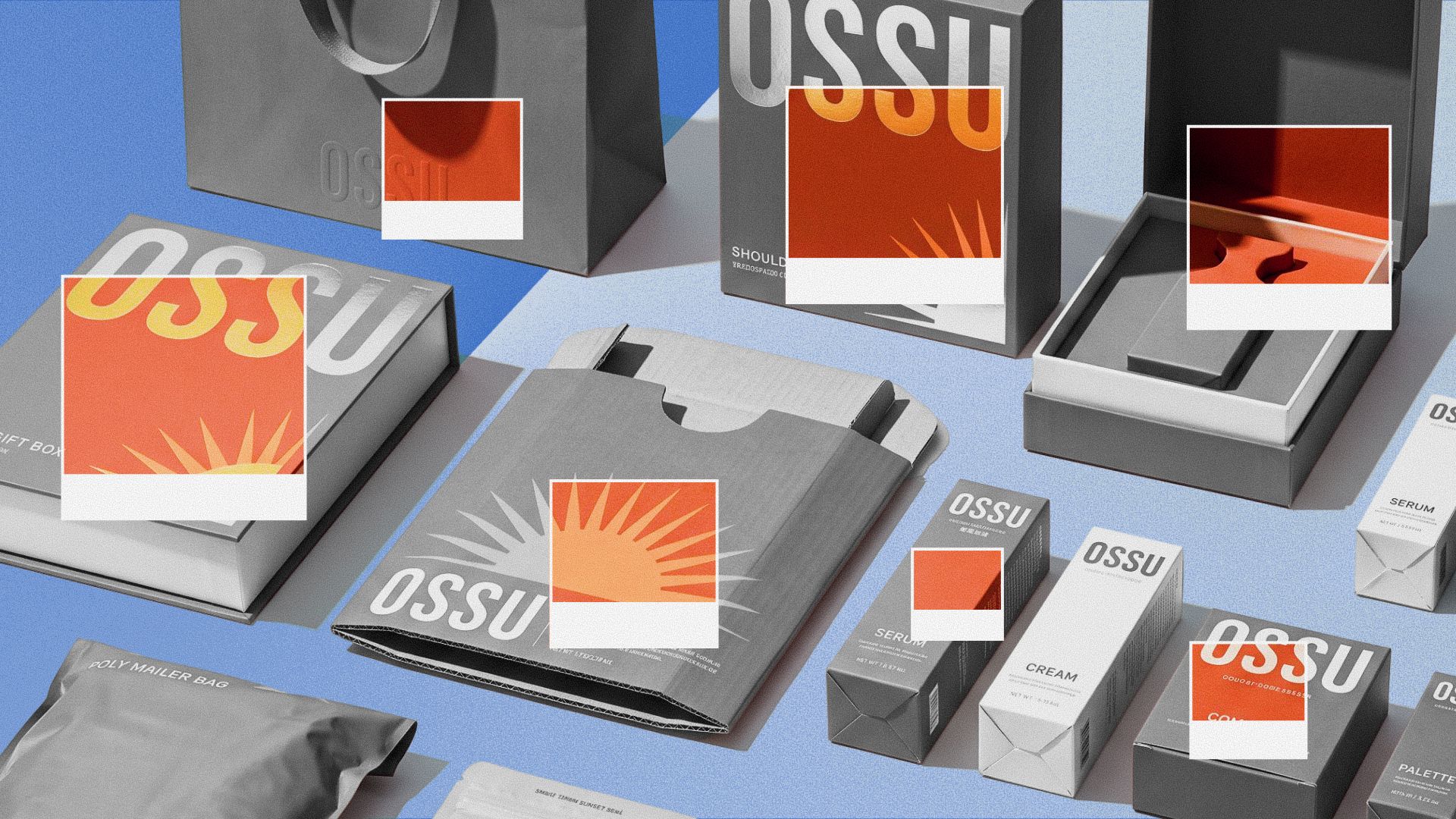
Key takeaways
Consistency at scale comes from governance, not luck: a measured color standard, a documented quality system, and one partner accountable across every factory.
- 01Brand color holds only when every press is calibrated to one standard, the G7 method, and measured by instrument, not by eye.
- 02Quality holds when it runs on a documented ISO 9001 system, not factory-by-factory trust.
- 03A first-run "golden sample" is the reference every reorder is checked against.
- 04Governing color and quality across the whole network keeps the tenth run identical to the first.
- 05Consistent brand presentation is linked to 10-20% higher revenue, per a Lucidpress/Marq survey.
Last updated August 2026.
The pack looked perfect at launch. Then the reorders came, and somewhere around the tenth run the blue looked a little grey, a lid stopped seating quite right, the finish was not the finish you approved. Nobody made a bad box. The spec simply drifted, run by run and factory by factory, until the product on the shelf no longer matched the brand you built.
That drift is one of the most common and most expensive packaging mistakes at scale, and it is not bad luck. Consistency across a growing, multi-SKU program is a governance problem. It comes from a small set of controls that hold color, structure, and finish to the same standard every time, whoever prints the job and however large the run gets. This guide covers what those controls are, how to tell whether a supplier actually runs them, and how PakFactory governs them across a whole manufacturing network. It matters commercially, on both sides of the ledger. In manufacturing broadly, poor quality (scrap, rework, returns, and complaints) can cost as much as 25% of sales (ASQ), while brands that present consistently report roughly 10–20% higher revenue (Marq/Lucidpress).
What "consistent at scale" really means for your brand
At launch, the hard part is choosing the right packaging. Once you are reordering on a recurring, multi-SKU program, the hard part changes: it is holding what you already chose. Consistency at scale is not one good first order. It is your color, your structure, and your finish arriving the same on every run, in every store, no matter which facility made the batch.
The reason this is worth governing is that customers read drift as decline. A shopper cannot name a Delta E value, but they can see that this month's box looks slightly off, and "slightly off" reads as a cheaper product. Left unmanaged, small variations compound into a brand that looks like it is slipping, which is exactly the equity a growing brand cannot afford to spend.
Why your brand color drifts as you scale, and how it is locked
Color consistency is the outcome you want: your brand color looking the same on every run, on every material, in every store. No ‘my blue arrived grey.’ Holding it is a color management problem, not luck.
Color drifts because the things that produce it vary. Different presses, ink batches, paper stocks, and facilities all pull the result in slightly different directions, and a small shift on each one adds up. Locking color means two things working together. First, every press is tuned to one shared color standard, so they are all aiming at the same target instead of each printer's idea of "right." Second, the printed color is checked with an instrument against a set tolerance, so a drift is caught on the press, before it ships, rather than by a customer on the shelf.
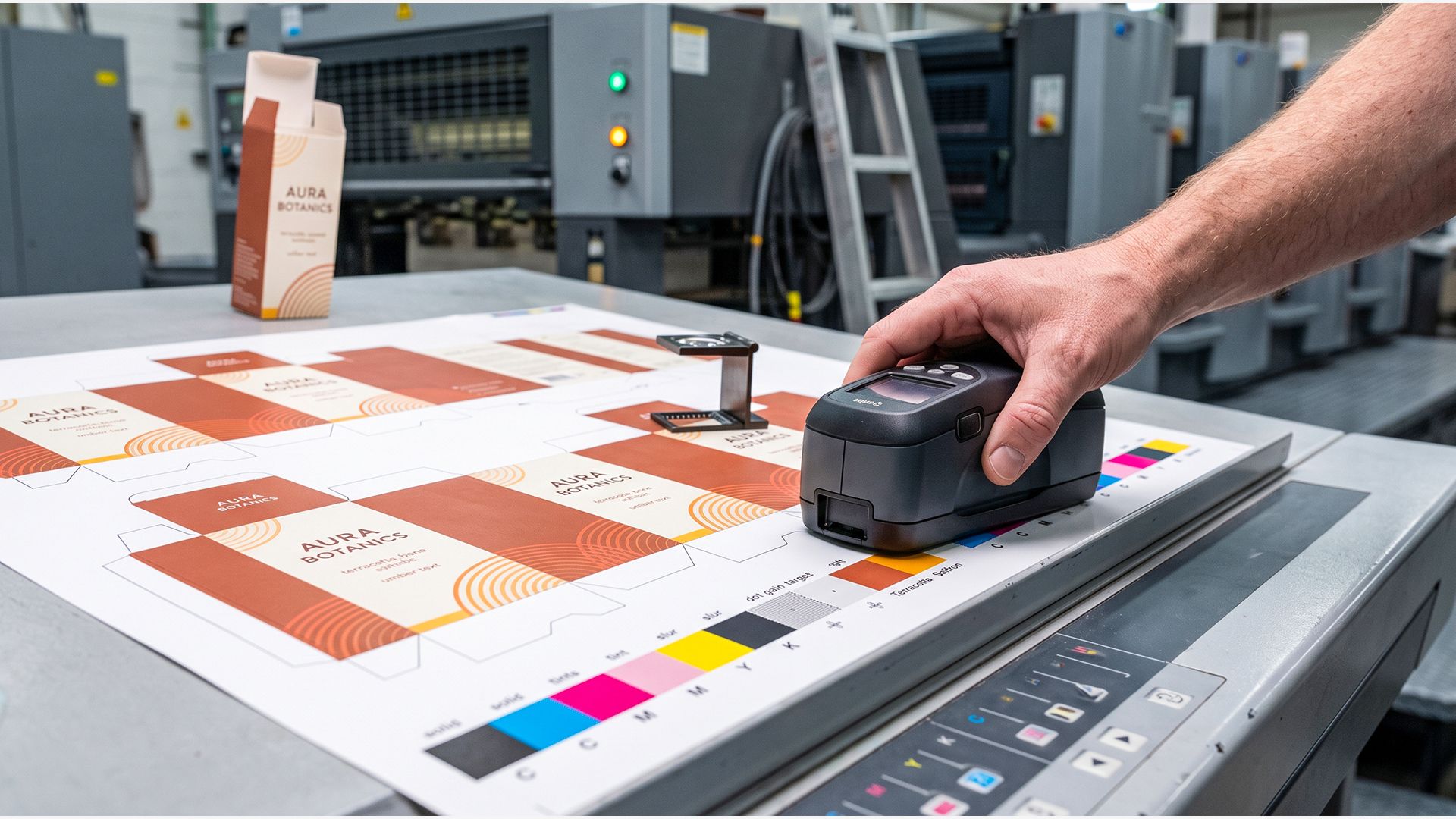

The industry standard for that shared target is the G7 method, and the difference a color you can measure makes is that "close enough" stops being a matter of opinion. If you also run signature brand colors as dedicated spot inks (Pantone) rather than rebuilding them from process color each time, the most brand-critical colors get locked to a fixed recipe. For the full detail on choosing between spot and process color, see our guide to the Pantone Matching System and CMYK printing.
Packaging quality control: making sure the tenth run is as good as the first
Color is only half of consistency. The other half is everything structural: the box assembles the same way, the lid seats the same way, the coating and the fit are what you approved, on the hundredth reorder as much as the first. That does not happen because a factory is careful. It happens because quality is run as a system rather than left to whoever is on shift.
Three things make that system real. There is a documented quality standard the production runs against, so "good" is defined, not assumed. There is an approved reference from your first run, a golden sample, that every later run is checked against. And there is inspection of each batch before it ships, with the results tracked over time so a facility that starts to drift shows up in the data instead of in your customer's hands.
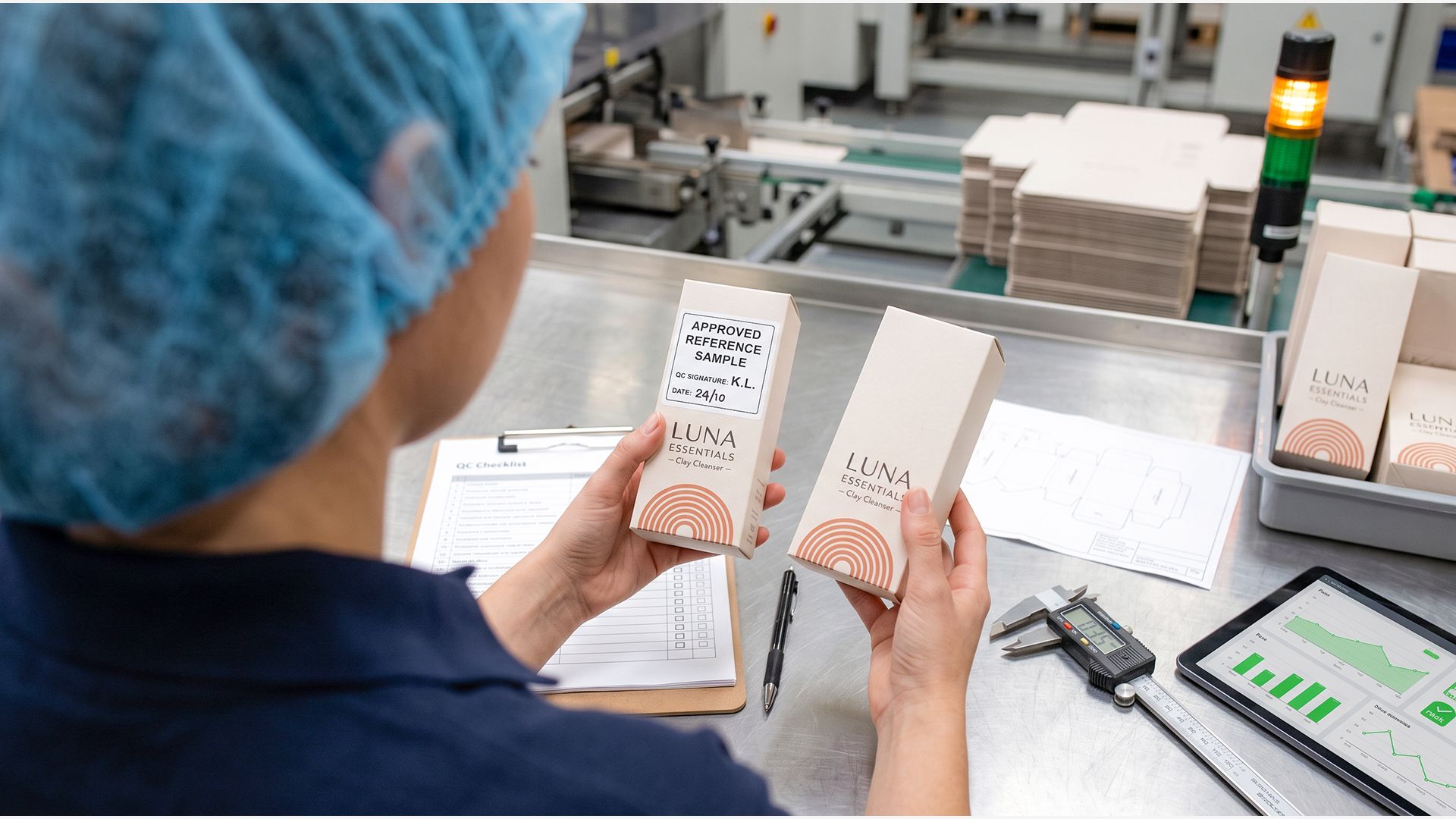

The recognized standard for that kind of quality management is ISO 9001. For regulated goods such as food packaging, additional standards layer on top; we cover those in our guide to food packaging safety standards.
Holding it across every factory: one standard, one accountable owner
This is where scaling brands actually get caught. As volume grows, a single job can run across more than one facility, and quality that was fine at one plant becomes a negotiation every time you add another. The goal is simple to state and hard to deliver: scaling should add volume, not variance.
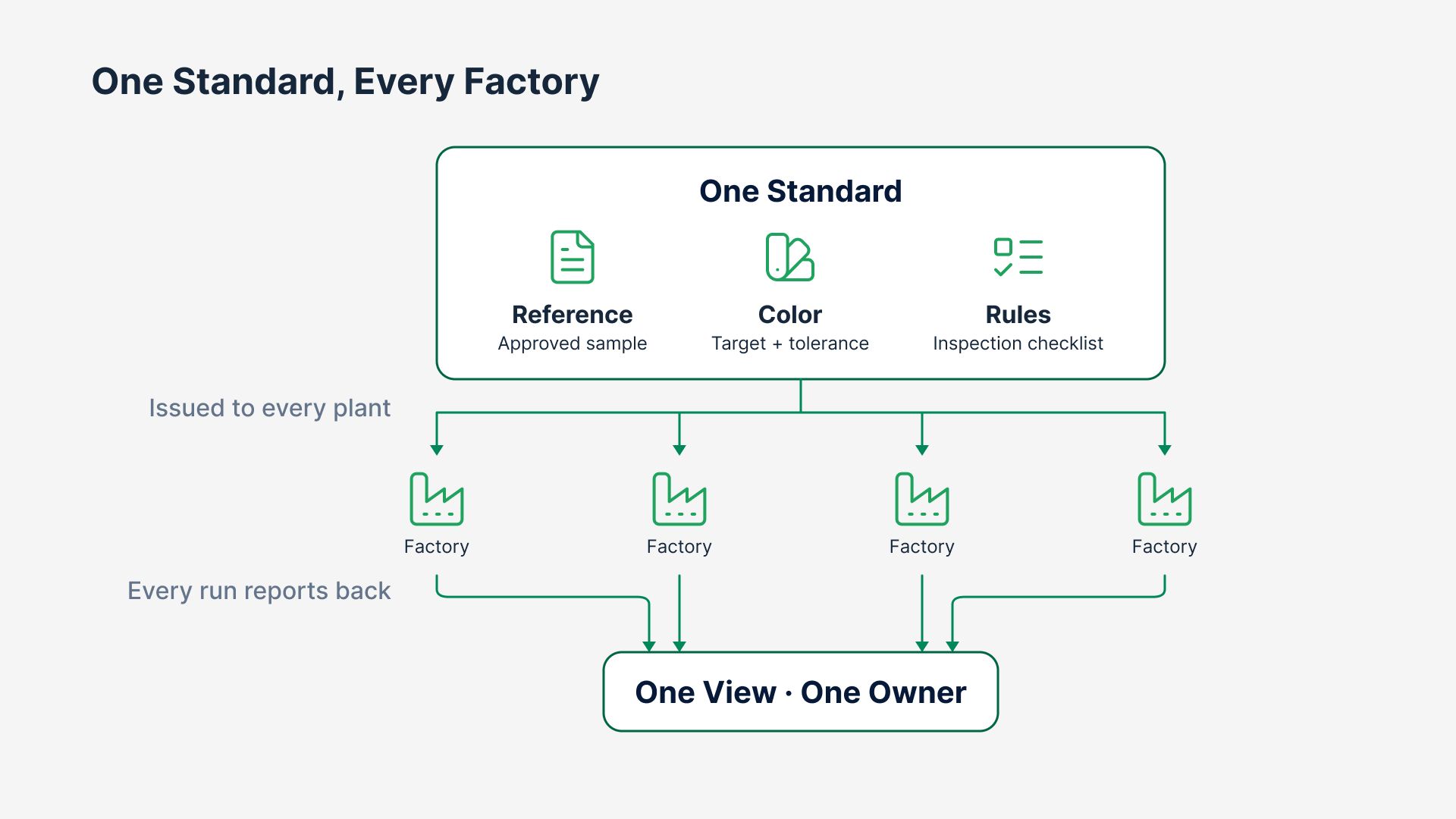
What makes that possible is governing the standard at the network level rather than trusting each factory to hold its own. One approved reference, one color standard, and one set of quality rules apply to every facility that touches your packaging, and the results roll up into a single view so nobody has to chase five plants for five different answers. That is the difference between promising consistency and proving it, and it is the answer to "it drifted as soon as I scaled."
This is the part PakFactory is built to carry. Your packaging is produced through a vetted, audited manufacturing network that is built and governed to hold color and quality to recognized standards, with a golden sample and consolidated quality reporting across facilities rather than plant-by-plant guesswork.
Your consistency checklist: what to demand from a packaging partner
You do not need to become a color scientist to protect your brand at scale. You need to know what to ask for. Here is what a partner should be doing, in plain terms.
What to demand:
- Your brand color matched and measured on every run, not judged by eye.
- An approved first sample your reorders are formally checked against.
- Every batch inspected before it ships, not spot-checked after complaints.
- The same standard held across every factory that makes your packaging.
- One point of accountability for all of it, end to end.
Questions worth asking any supplier:
- How do you make sure my color is the same on every run, and can you show me the proof?
- What exactly do you check my reorders against?
- How do you catch defects before they ship, not after?
- If my job runs in more than one factory, who makes sure they match?
- Who owns quality from start to finish?
Red flags: "we match it by eye," no approved reference sample, quality handled factory by factory with no one owning the whole, and no way to show you the numbers when you ask.
How PakFactory delivers color and quality at scale
PakFactory is built around exactly this problem. We set the color and quality spec with you at the start, then hold it as you grow. Color is managed to a shared standard and verified by measurement, not eye. Quality runs on a multi-stage protocol anchored to an approved golden sample, with inspection built into every run. And because production happens across a vetted, audited network governed centrally, the same spec holds whichever facility prints your job, so adding volume does not add variance. One partner owns it from strategy through manufacturing, logistics, and fulfillment, which is what our Absolute Certainty promise means in practice: the color and quality you approved, held to the first run's standard, at any scale.
If your color or quality has started to drift as you have scaled, or you want to make sure it will not, talk to our team about a consistency and sourcing review, and request a sample so you can see the standard we hold before you commit.
Sources
- G7 color calibration: Idealliance, G7 for Color Management.
- Offset color aim values: ISO 12647-2.
- Color difference and print tolerances (Delta E): X-Rite; Techkon.
- Quality management system standard: ISO 9001.
- Acceptance sampling (AQL): ISO 2859-1.
- Brand consistency and revenue (directional; self-reported survey): Marq (Lucidpress).
- Regulated packaging standards (BRCGS, FSSC 22000, ISO 22000): PakFactory food packaging safety standards.
- Cost of poor quality: ASQ — Cost of Quality.
Frequently asked questions
Written by
5+ years in content strategy — building packaging case studies, guides, and blogs.