
Key takeaways
Packaging strategy should shift focus at each growth stage, not freeze at launch.
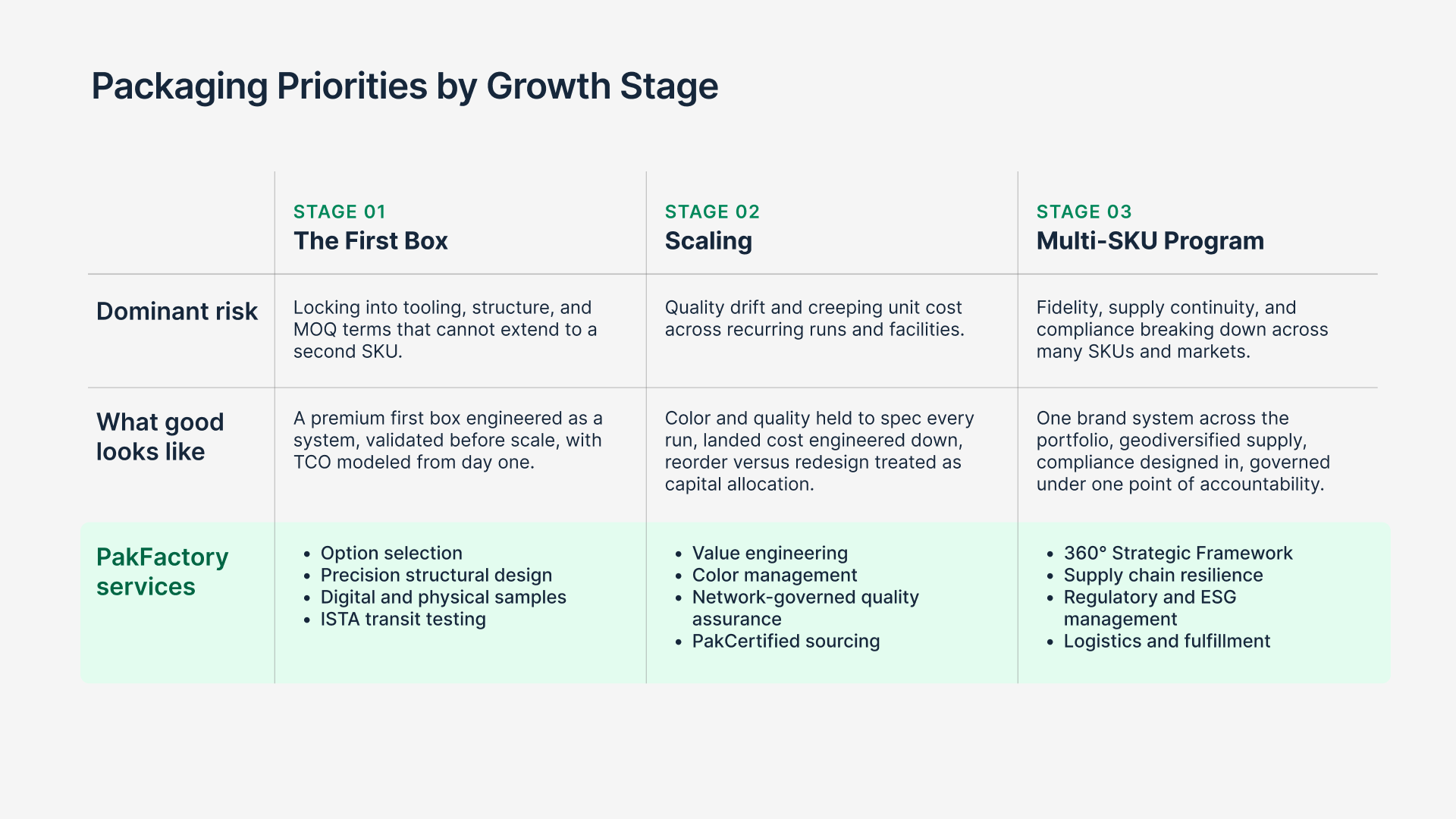
- 01First box: build for optionality, so a second SKU extends the line instead of forcing a redesign.
- 02Scaling: govern color and quality across runs, and value-engineer cost out of every reorder.
- 03Multi-SKU: govern brand fidelity, supply continuity, and compliance across markets.
- 04Throughout: judge decisions by Total Cost of Ownership, not unit price.
Last updated August 2026.
Packaging is one of the few line items that touches brand equity, unit economics, and supply chain risk at the same time. Yet most brands lock their specifications at launch and never revisit the strategy as their SKU count, channel mix, and cost base change. The expensive failures that follow, including quality drift across runs, stranded inventory, redesign churn, and compliance gaps, are strategy failures rather than box failures.
This guide treats packaging as a portfolio decision that evolves across three inflection points: the first box, the scaling phase, and the multi-SKU program. For brands and operations teams scaling past their first launch, read it as a map for where your packaging strategy should sit, given where your brand actually is.
Two Variables Define Every Packaging Decision
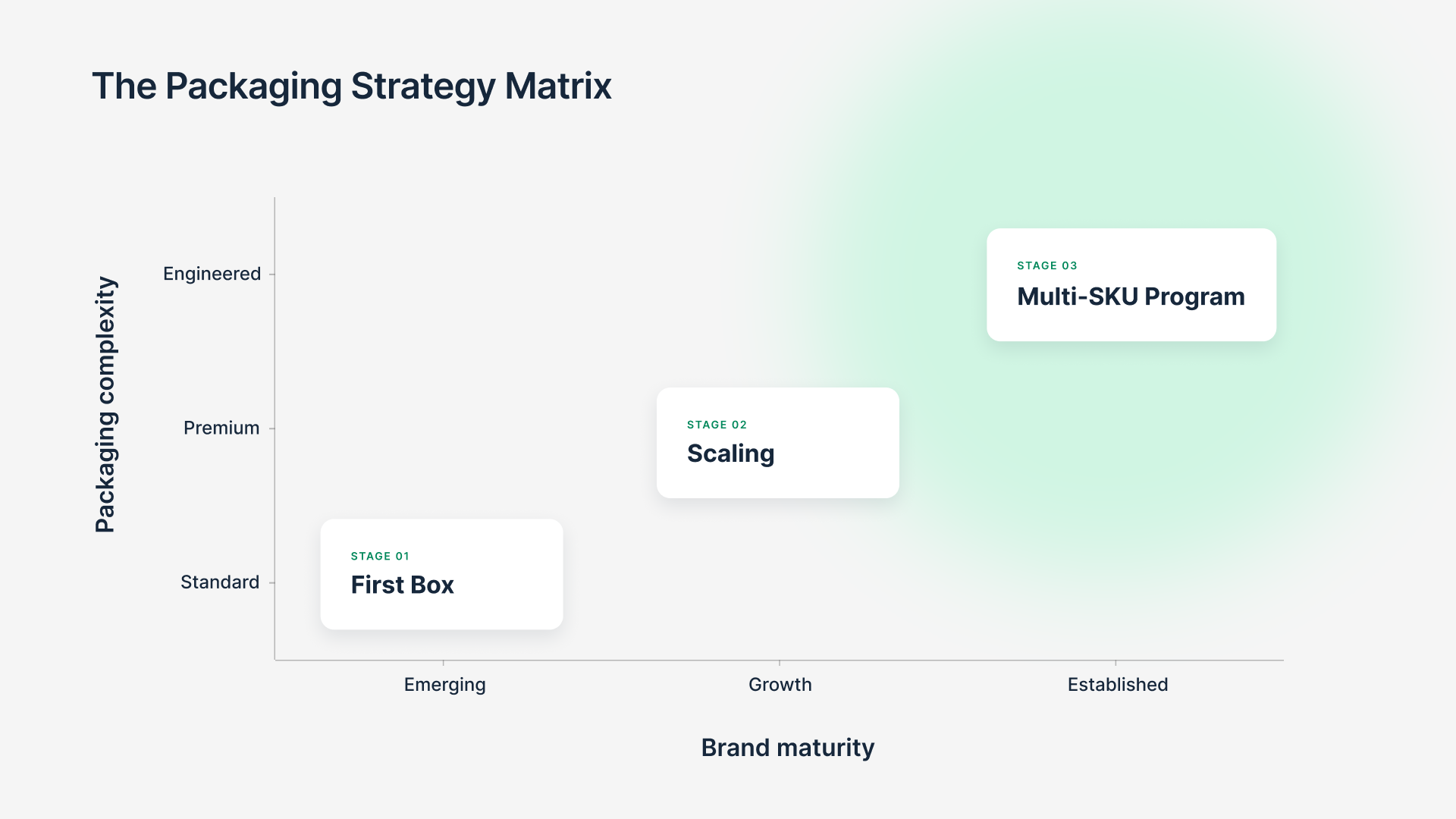
Every program sits on two axes. The first is brand maturity, moving from emerging to growth to established. The second is packaging complexity, moving from standard to premium to engineered. Early on, the objective is impact and optionality. As volume grows, it shifts to consistency and cost. At portfolio scale, it becomes brand fidelity, supply chain resilience, and regulatory control.

Stage 1: The First Box, Designing for Optionality
Emerging brand · premium entry · single SKU
At launch, the real risk is rarely choosing the wrong box. It is committing to tooling, structure, and order terms that constrain the next 18 months of growth. Your minimum order quantity (MOQ) climbs with structural complexity and custom tooling, so an elaborate first box quietly locks you into larger commitments on every run that follows. A first box that cannot extend into a product line then forces a full redesign the moment a second SKU appears, restarting the work from zero.
Three decisions carry disproportionate weight at this stage:
- Format against channel economics. The right format follows the sales channel: ecommerce and DTC shipments have to survive transit, retail demands shelf presence, and marketplaces reward dimensional efficiency.
- Structure designed for extension. A dieline, the flat die-cut template a carton is cut and folded from, becomes a dead end when it is locked to one product’s exact dimensions. Engineered as a system, with consistent proportions and modular inserts, that same dieline becomes the foundation for an entire line.
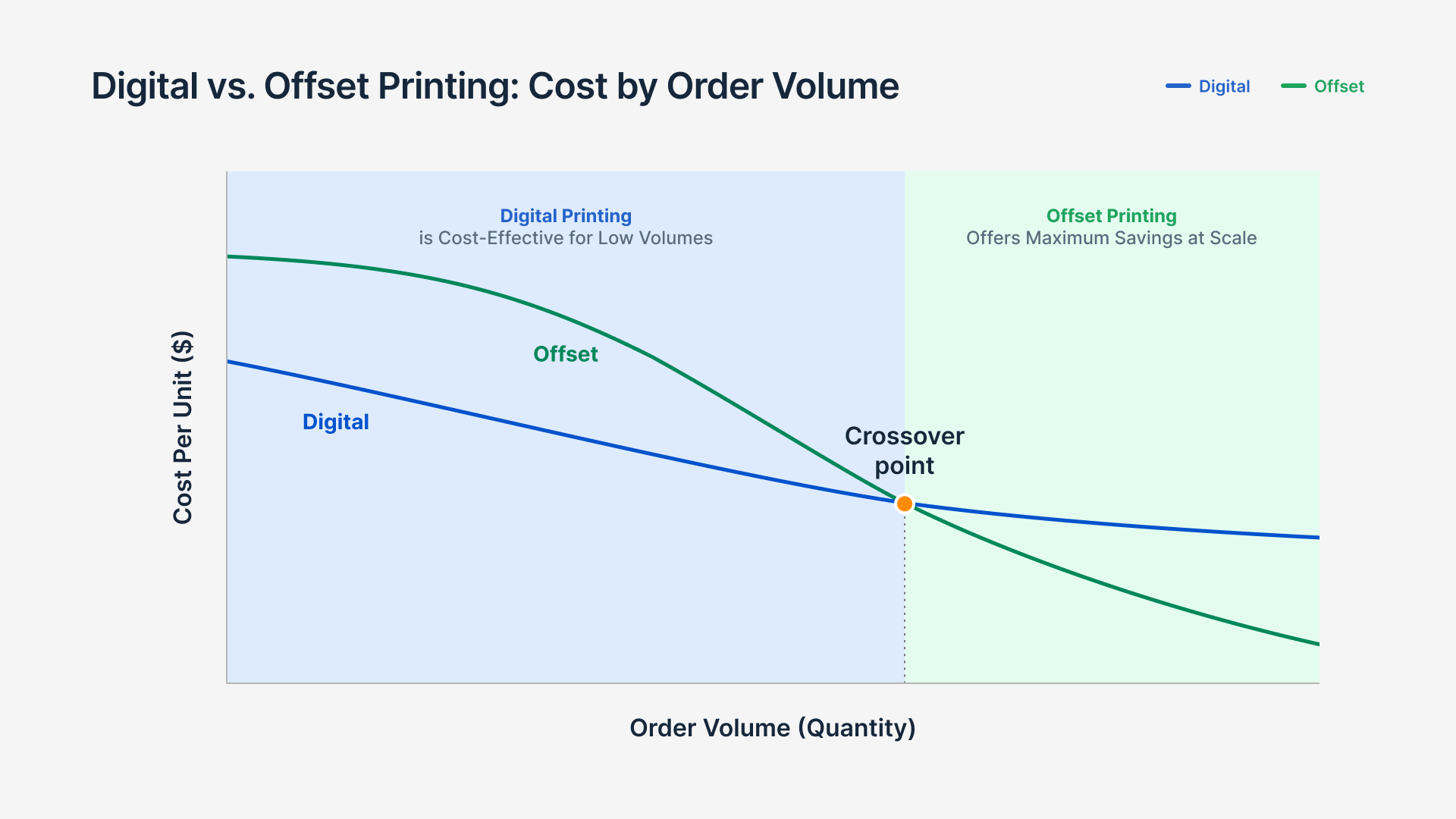
- Print method crossover. Digital printing needs no plates and minimal setup, so it keeps low-volume runs affordable. Offset printing transfers ink from plates through a blanket onto the substrate, making it the lower per-unit cost above a predictable volume threshold while unlocking richer color and a wider substrate range. Knowing where that crossover sits prevents both overpaying at launch and re-tooling later.
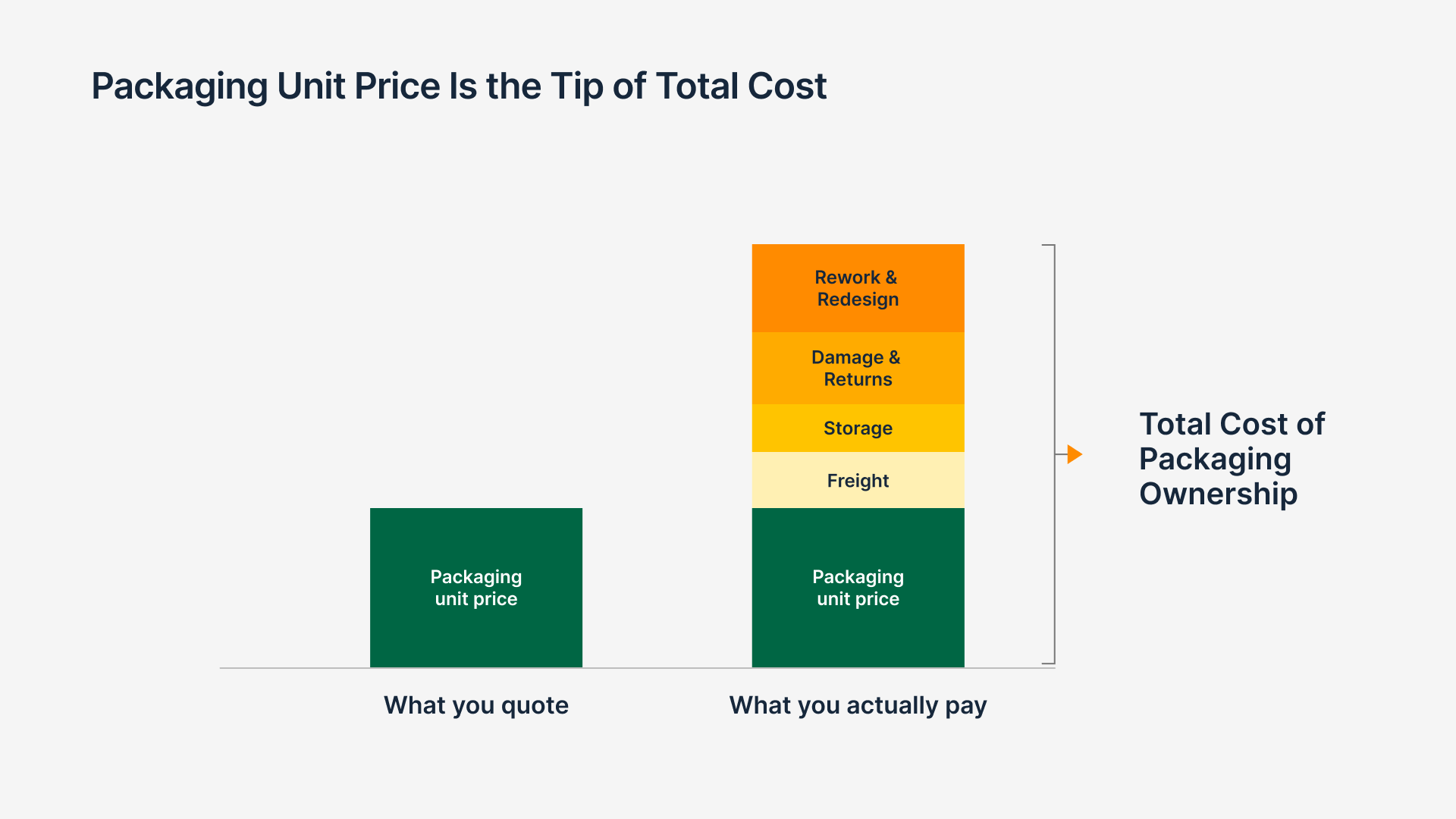
Finally, size volume commitments to validated demand, not forecast optimism. Overstocks cost retailers an estimated $554 billion a year, roughly a third of the $1.77 trillion lost to inventory distortion (IHL Group, 2024), and packaging bought ahead of demand carries the same markdown, storage, and obsolescence drag. Pair a pre-production sample with International Safe Transit Association (ISTA) testing, and model TCO, which counts material, freight, storage, and damage rates together, rather than unit price alone.
Stage 2: Scaling, Engineering Consistency and Cost Out
Growth brand · recurring, multi-SKU · premium
The move from a single project to a recurring program changes the dominant risk from selection to consistency. Quality drift, the small variations in color, structure, and finish that accumulate across runs and facilities, is the quiet erosion of a brand that looked precise at launch. Two disciplines contain it:
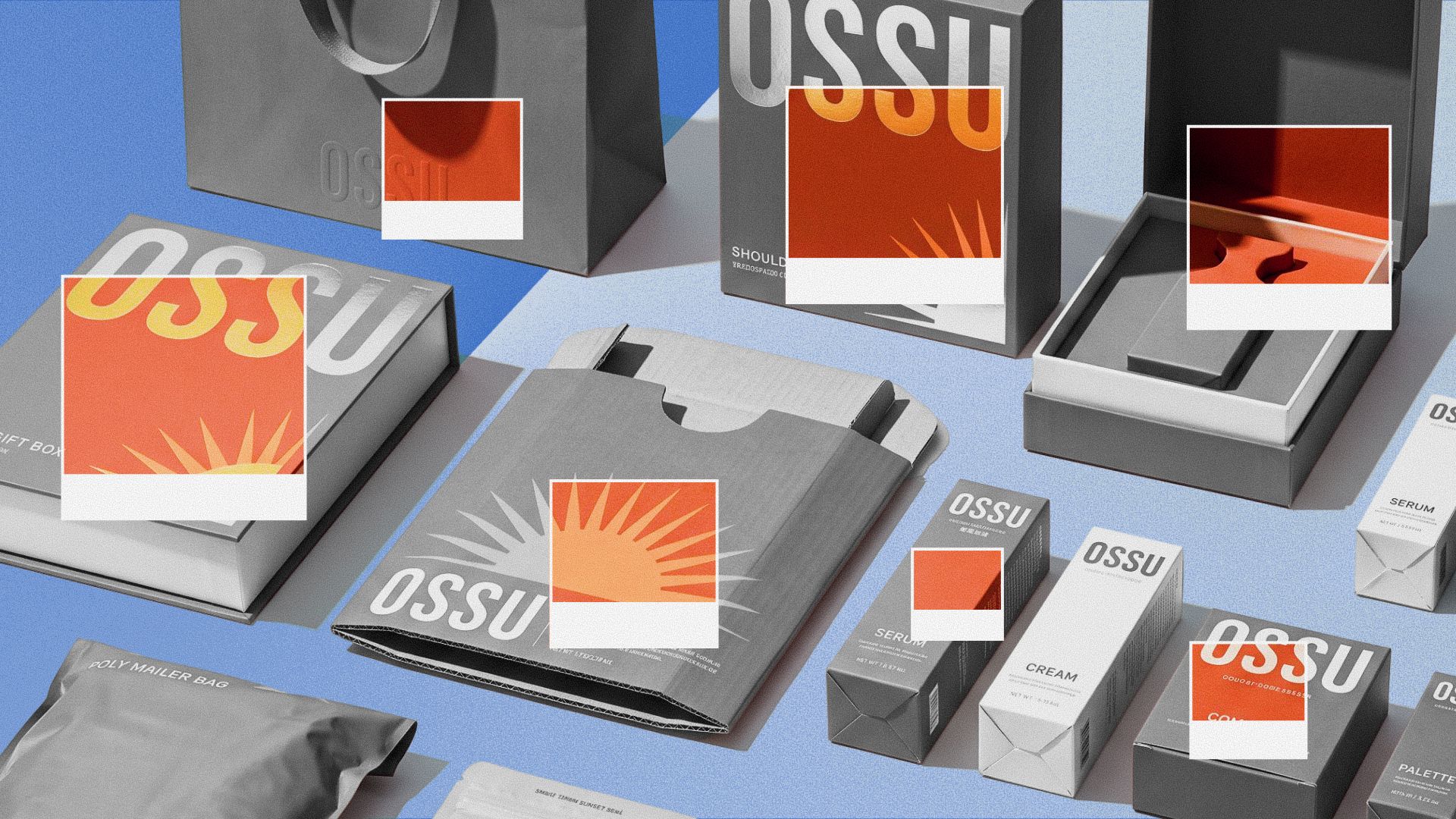
- Color governance. Locking brand colors with G7 Master Colors calibration holds fidelity across substrates, runs, and facilities.
- Network-level quality control. Quality enforced at the network level against standards such as ISO 9001, rather than trusted to individual factories, this keeps the tenth run identical to the first.
Scale also reframes cost. The lever is no longer unit price but value engineering, which means improving structure and materials to lower landed cost without diluting the product. Carton optimization alone can cut shipping cost by an average of 15%, and up to 35% (DHL). On a run of one million units, trimming one cent per box is $10,000, so efficiencies that look trivial per unit become a meaningful line item across a full order.
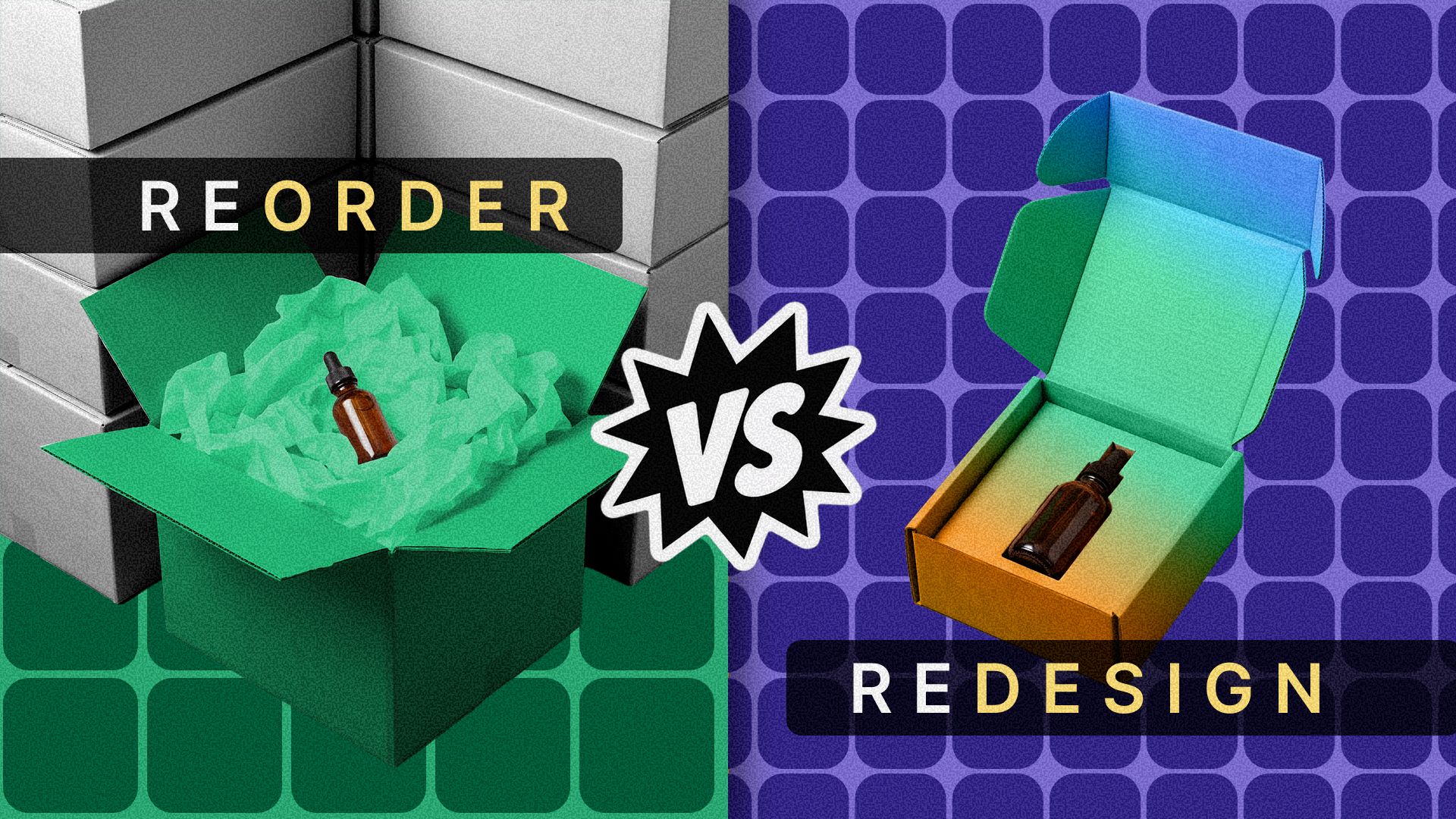
This is also where the most consequential recurring question surfaces: when to reorder and when to redesign. Reorder while the current pack still serves the brand and the cost curve; redesign when a structural change unlocks cost, performance, or brand gains that outweigh new tooling. Treated as a capital-allocation decision rather than a reflex, the choice protects both brand and margin.
Stage 3: The Multi-SKU Program, Governing a Portfolio
Established brand · multi-market · engineered portfolio
At portfolio scale, packaging stops being a series of orders and becomes infrastructure. The work is governance across many SKUs and multiple markets at once. Three priorities dominate:
- Brand equity and portfolio alignment. Every SKU must read as the same brand. Synchronized specifications, shared color standards, and a common structural language let a new line extend the portfolio rather than reset it.
- Supply chain resilience. A concentrated packaging supply chain is a single point of failure. Geodiversification across regional manufacturing hubs, elastic capacity for seasonal surges, and JIT inventory arrangements turn volatility into a managed variable.
- Regulatory and channel compliance. Food packaging has to meet FDA food-contact (21 CFR 176) standards, pharmaceutical packaging carries labeling and child-resistance requirements, and retail and marketplace channels add routing-guide and Fulfillment by Amazon (FBA) requirements on top.
At this scale, a sustainable packaging strategy is a design input, not a marketing claim, and it rarely costs more in the end. Some sustainable materials carry a higher unit price, but designing for circularity and right-sizing usually lowers material and freight cost, and more than half of consumers say they would pay more for sustainable packaging (McKinsey, 2025). Measured through a LCA, sustainability tends to protect margin rather than erode it.
Packaging Strategy Is Continuous, Not Procurement
The throughline across all three stages is that packaging strategy is a discipline, not a one-time purchase. The dominant question simply changes with scale: at the first box, how to enter premium without foreclosing your options; at scaling, how to hold consistency and engineer cost out as volume grows; at multi-SKU, how to govern fidelity, resilience, and compliance across a portfolio. Kept this way, packaging decisions compound in your favor instead of unwinding.
Where PakFactory Fits
PakFactory works as one partner across the whole arc, from early strategy through to the finished boxes arriving where they need to be. Our 360° Strategic Framework keeps those decisions connected, so the choice you make at one stage still pays off at the next. Behind that sits a vetted, audited global manufacturing network and a track record across 5,000+ brands in more than 20 industries.
Frequently asked questions
Written by
5+ years in content strategy — building packaging case studies, guides, and blogs.