
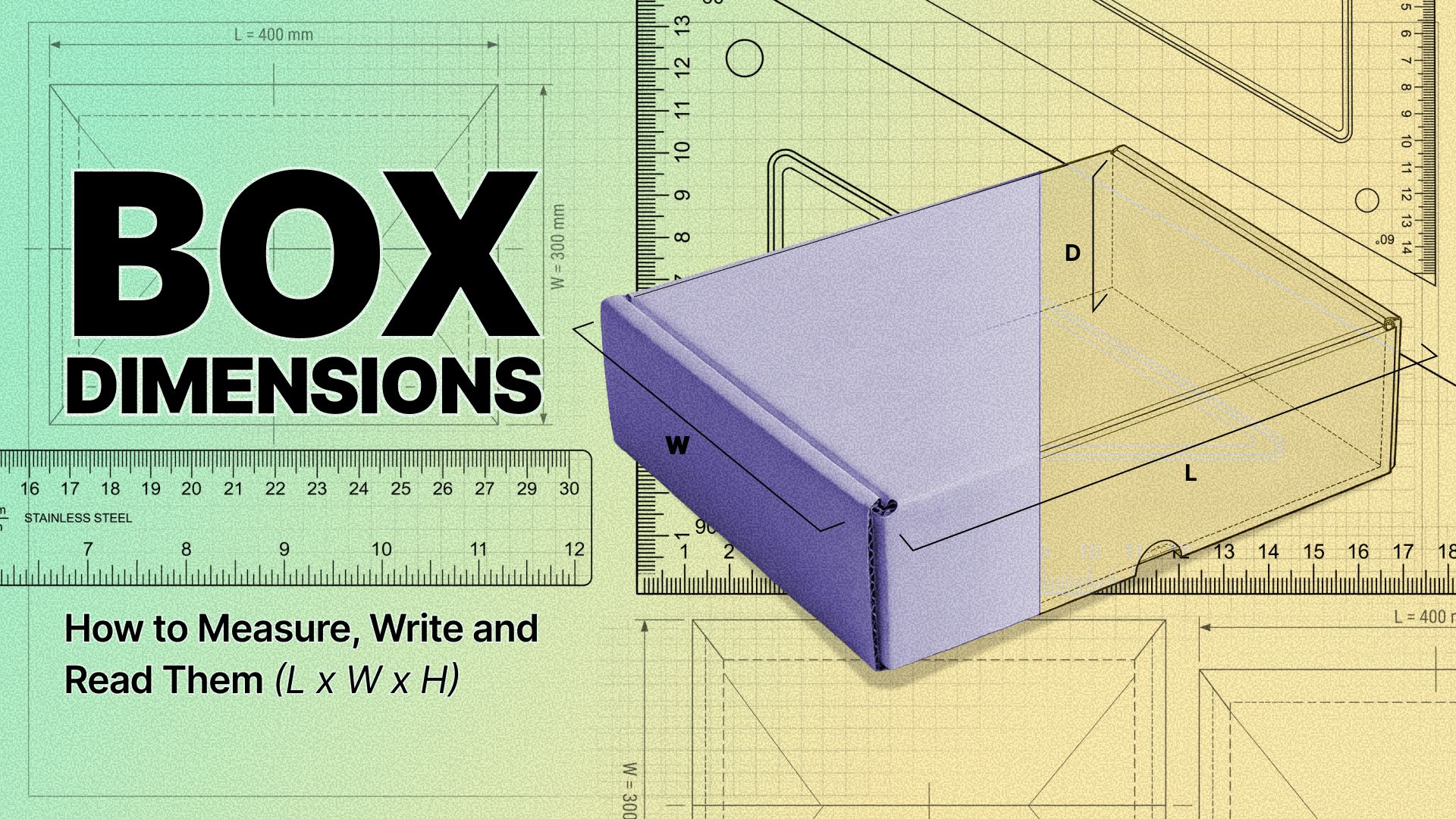
Key takeaways
Box dimensions are written length first, then width, then height, and measured on the inside of the box.
- 01Length is the longest side of the opening, width the shorter side.
- 02In L x W x H, a number's position is what tells you which dimension it is.
- 03Packaging suppliers quote internal dimensions, because board thickness sits outside the product's space.
- 04Since 18 August 2025, FedEx and UPS round each fractional dimension up to the next whole inch.
Last updated October 2026.
This guide covers the order dimensions go in, how to write and read them, and how to measure them so a supplier can quote from what you send.
What Order Do Box Dimensions Go In?
Length first, then width, then height. That order is the convention across packaging and shipping, and it is what a supplier will assume unless you tell them otherwise.
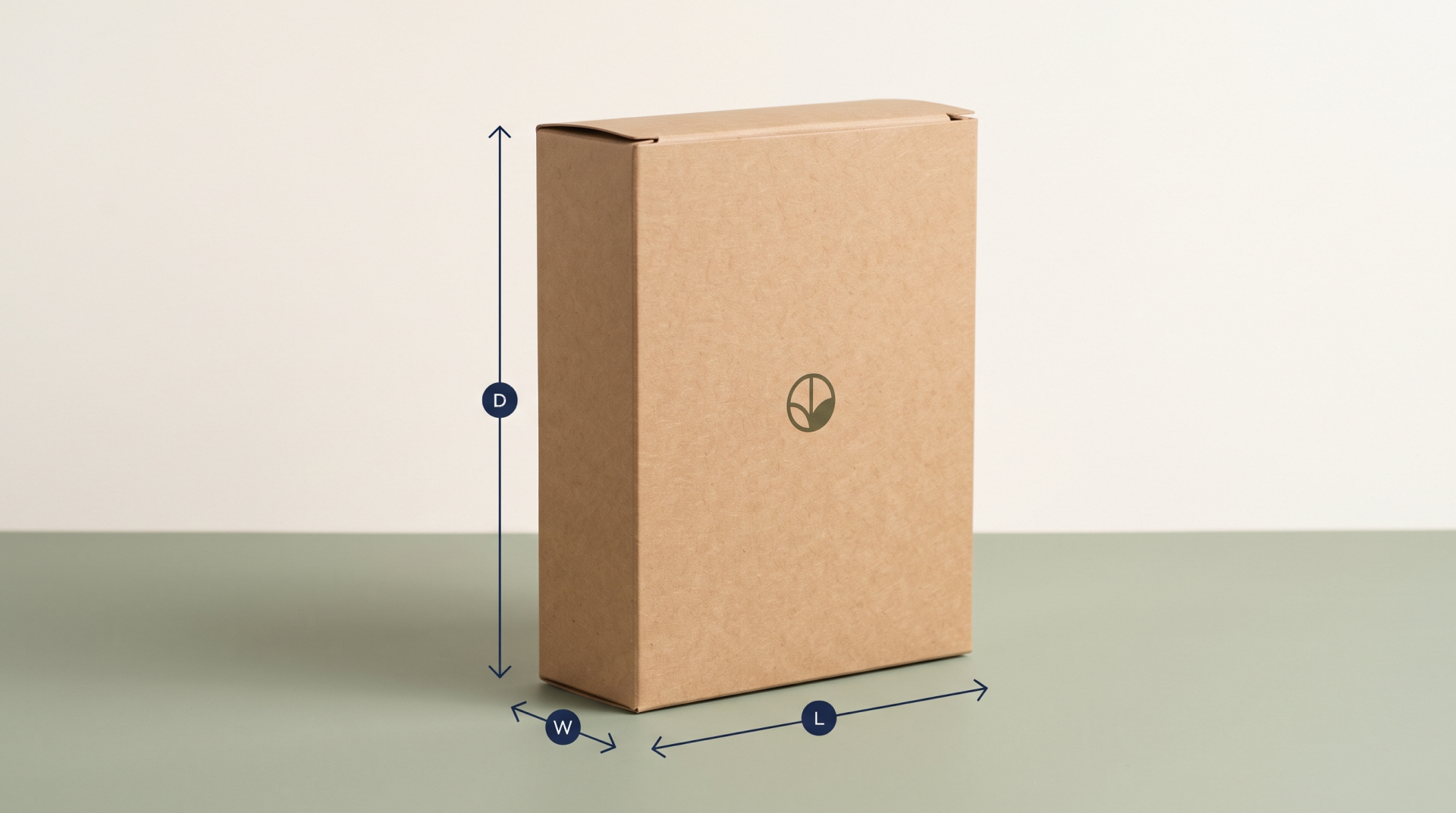
- Length is the longest side of the box opening. Look down at the open box and find the longer of the 2 edges facing you.
- Width is the shorter side of that same opening, running perpendicular to the length.
- Height is the distance from the opening down to the base. Some suppliers call this depth, and the 2 words mean the same thing here.

One point that trips people up: length and width are decided by the opening, not by which side happens to be biggest. A tall, narrow box still has its length and width measured across the top. The height is simply larger than both.
What Does L x W x H Mean?
L x W x H is shorthand for Length x Width x Height, the 3 numbers that describe a box, written in that fixed order. Because the order is fixed, a number's position is what tells you which dimension it is. No labels needed.
So 12" x 9" x 5" means 12 inches long, 9 inches wide, and 5 inches tall. The same 3 numbers in a different order describe a completely different box.
You will see a few variations of the same idea:
- L x W x H is the most common, and the one to use by default.
- L x W x D substitutes depth for height. It means the same thing, and it is more common among packaging converters than among shippers.
- W x L x H appears occasionally and reverses the first 2 numbers. If a supplier sends you this, confirm what they mean rather than assuming.
When in doubt, write the letters out next to the numbers. 12" x 9" x 5" (L x W x H) removes the ambiguity entirely.
How Do You Write and Read a Box Dimension?
Write all 3 numbers in the same unit, in L x W x H order, and state the unit once. That is the whole convention.
A correctly written dimension looks like this: 12" x 9" x 5" (L x W x H)
A few rules keep it readable:
- Use one unit throughout. Do not mix inches and millimeters in the same dimension. Metric is written the same way: 305 mm x 229 mm x 127 mm (L x W x H).
- Use a lowercase x with spaces around it, not the multiplication symbol and not a dash.
- Say whether the numbers are internal or external. More on why in a moment, but a supplier who does not know which you sent has to guess.
Reading one works in reverse. Take the numbers in order, assign them to length, width, and height, and check the unit. If a listing gives you 3 numbers and no letters, assume L x W x H, then confirm before you order anything.
How Do You Measure a Box?
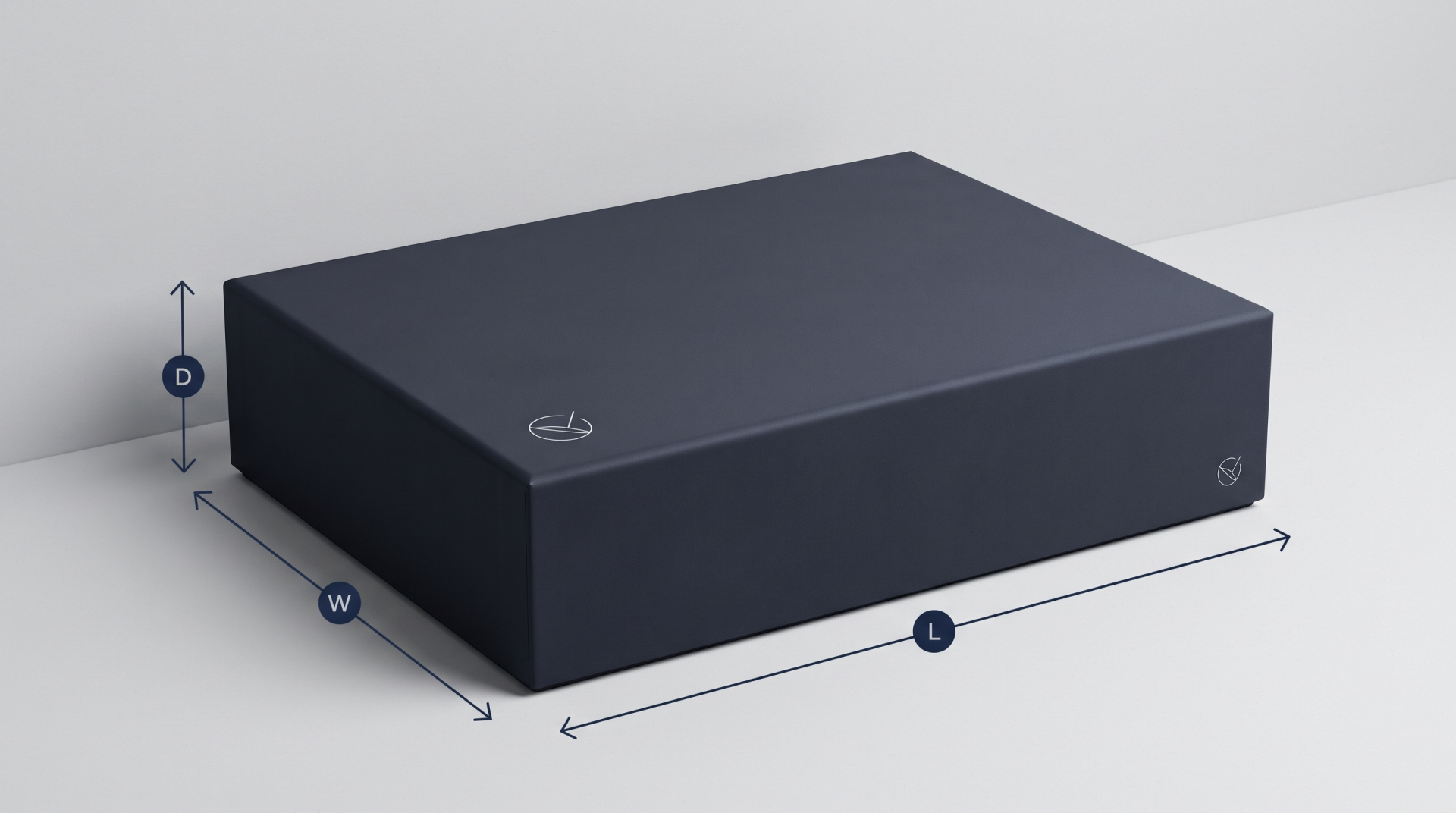
Measure the inside of the box with a ruler or tape measure, taking each dimension once and writing it down as you go.
The sequence:
- Open the box and set it so you are looking down into it.
- Measure the longer edge of the opening, from inside wall to inside wall. That is your length.
- Measure the shorter edge of the opening the same way. That is your width.
- Measure from the top edge down to the inside of the base. That is your height.
- Write all 3 in order with the unit.
Two things worth knowing while you do it.
Measure to the inside walls, not across the top edges. It is an easy slip on a corrugated box, where the walls have real thickness.
Do not round down. If a side measures 12.4 inches, record 12.4 inches. Rounding is a decision that belongs later, and as the shipping section below explains, rounding the wrong way now costs money on every parcel.
Why Do Packaging Suppliers Use Internal Dimensions?
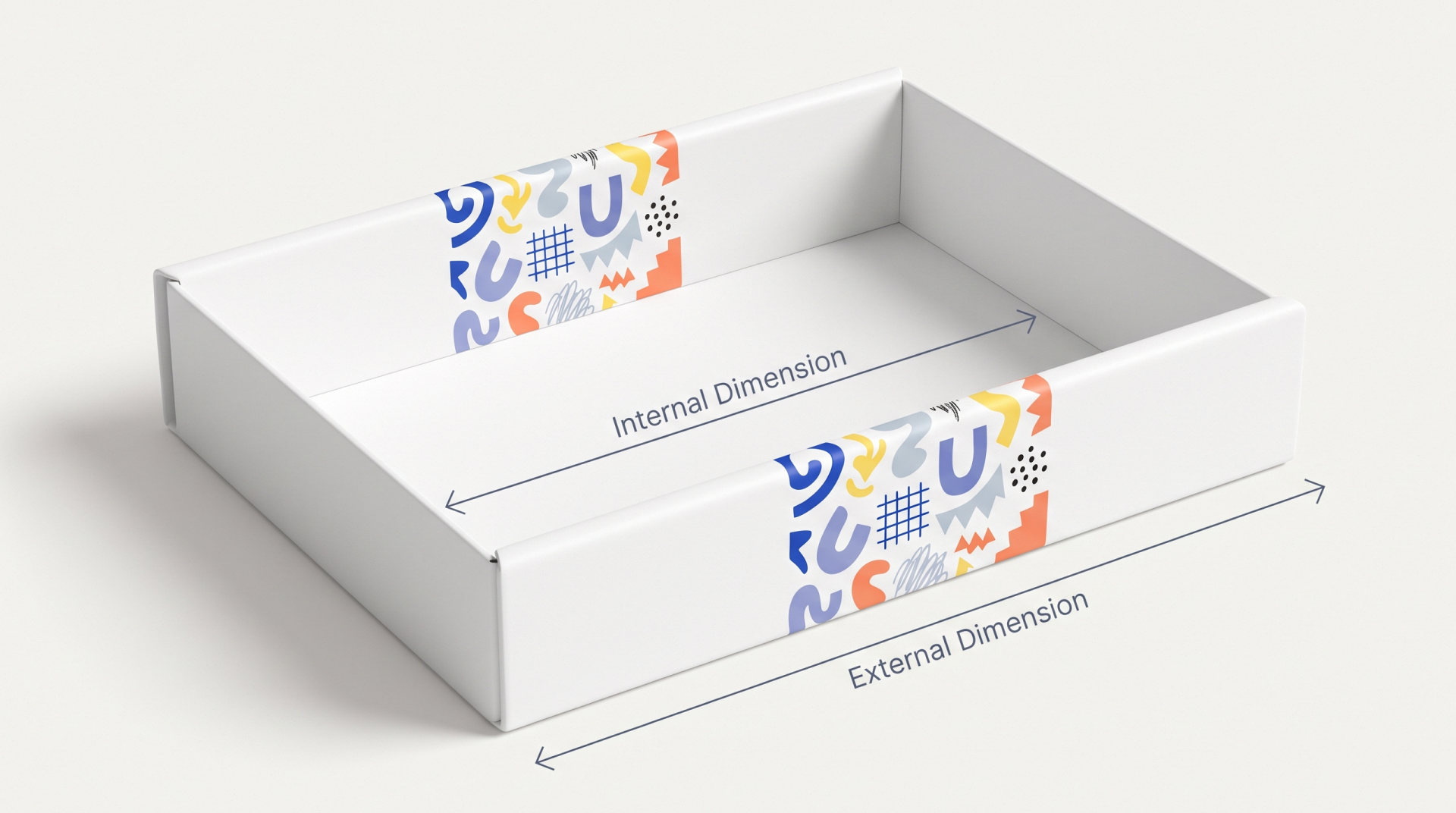
Because the box is built around your product, and the board's own thickness sits outside the space your product can use.
This is the single most common source of a box that does not fit. A customer measures the outside of a sample box, sends those numbers, and receives packaging that is slightly too small, because the manufacturer built a box with that external size and the walls ate into the inside.
The gap is not large, but it does not need to be. Corrugated board is a fluted layer sandwiched between 2 liners, and that structure has measurable thickness on every wall. A snug product loses the clearance it needed.
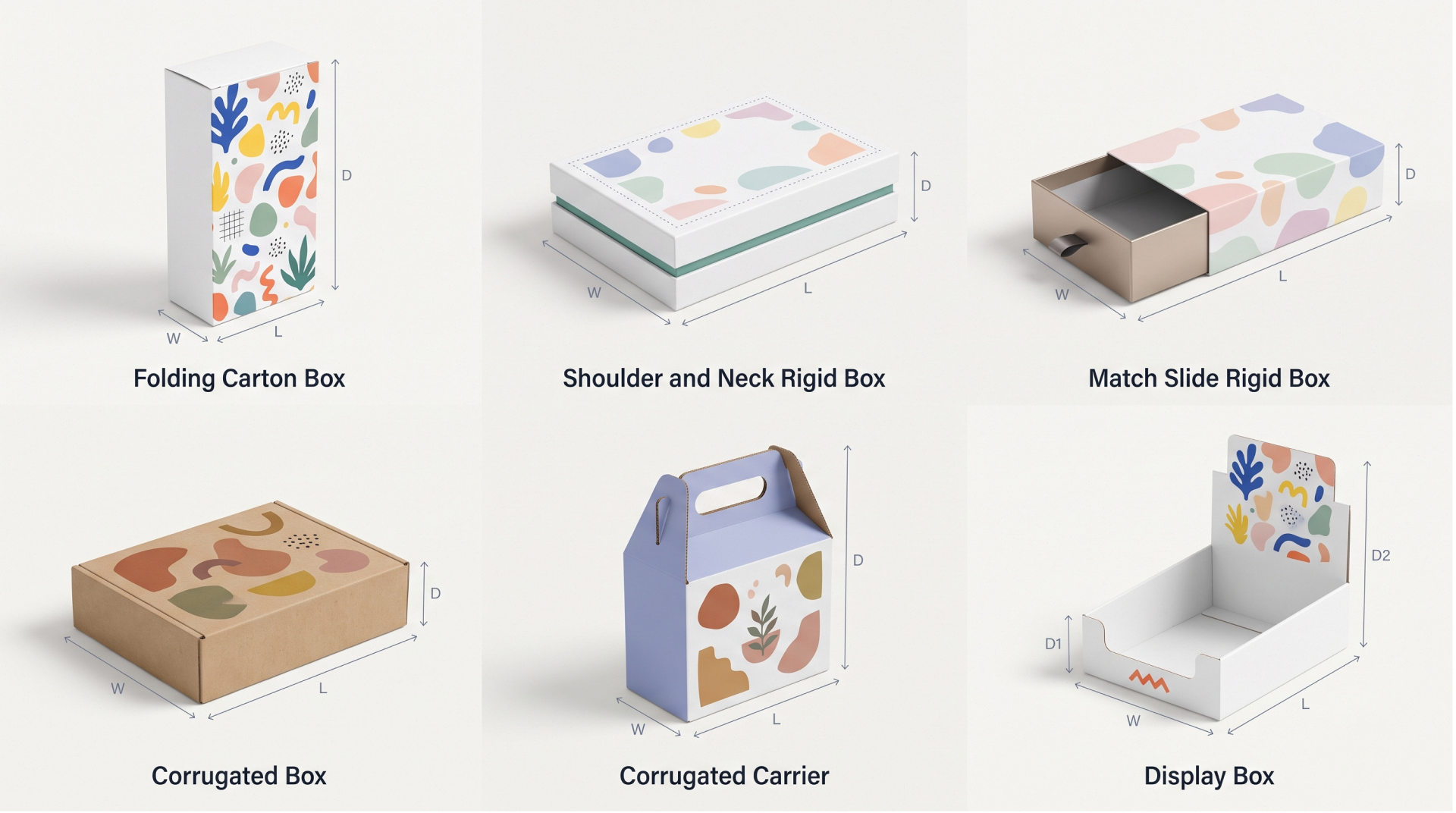
This applies to every rigid format, and the format decides how much it matters. A folding carton is a single layer of paperboard, so its walls are the thinnest and the gap is smallest. A corrugated mailer box has the fluting in between, so the gap is wider. A rigid setup box has the widest gap of all, because its wall is chipboard with a printed wrap over the top of it. That last one catches people out most often, precisely because a finished rigid box looks so exact that it does not occur to anyone that the wall has thickness.
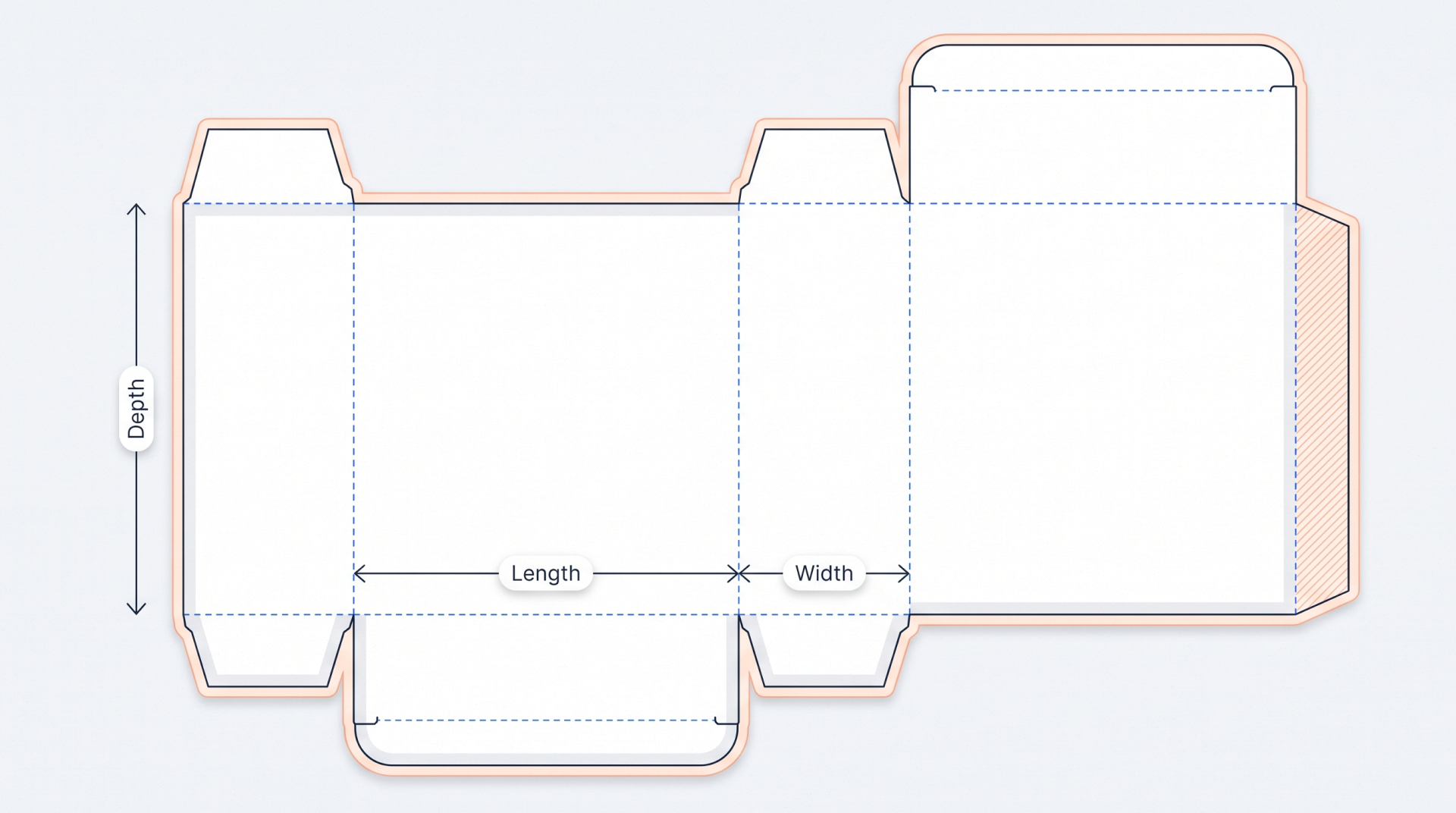
Internal dimensions also drive the rest of the specification. Your dieline, the flat template a box is cut from, is built outward from the internal measurement. So is any insert sitting inside. Both start from the space the product occupies.
It is worth knowing that external dimensions are not wrong, just answering a different question. The Fibre Box Association's own glossary draws the line this way: inside dimensions "are used to assure proper fit around a product," while outside dimensions "are used in the carrier classifications and in determining pallet patterns." So you will need both eventually. You need the inside number to get a box made, and the outside number to work out what it costs to ship and how many fit on a pallet.
There is also a published method for this, if you ever need to settle an argument about whether a run met its tolerance. ASTM D2658, Standard Test Method for Determining Dimensions of Fiberboard Boxes, covers both interior and exterior measurement of single-wall, double-wall, and solid fiberboard boxes, and sets out how many specimens to measure and how to report them.
So when you send dimensions to a supplier, send internal, and say so.
How Do Box Dimensions Affect Shipping Cost?
Carriers bill the greater of a parcel's actual weight and its dimensional weight, so an oversized box costs you on every order rather than once.
Dimensional weight is a volume calculation. Multiply the 3 dimensions in inches, then divide by your carrier's dimensional divisor.
That divisor is not universal, and getting it wrong changes every number that follows. FedEx publishes 139 for US shipments. UPS publishes 166 for domestic and 139 for export in its 2026 US retail rate guide. Negotiated contract rates often carry a different figure again, so check your own rate agreement before you run the math.
The rounding is the part that makes the measurement itself worth money. Both carriers round every fractional dimension up to the next whole inch, measured at the longest point, before that calculation runs. UPS puts it plainly in its 2026 rate guide: "For each dimension, measure at the longest point, rounding each fractional measurement up to the nearest whole number (for example, 1.1 will be considered 2)." FedEx moved to the same rule on 18 August 2025. Across typical parcel portfolios the change added 5% to 12% to billed weight.
A box measuring 12.4 inches on its longest side is now billed at 13. The 0.4 of an inch is charged and delivers nothing.
That turns into a simple design rule: specify your box in whole inches wherever the product allows it. Bringing a dimension under the next whole number is free volume on every parcel you ship. The same logic applies when you are deciding whether to reorder an existing box or redesign it, and it is one of the first things to check on an e-commerce pack.
Send us the inside measurements and we will quote from them. Talk to our team about a box specification, and request a sample so you can measure the real thing before you commit to a run.
Sources
- Definitions of length, width, depth, and the length-width-depth sequence, and the distinction between inside and outside dimensions: Fibre Box Association glossary.
- The published method for measuring a fiberboard box, interior and exterior: ASTM D2658-18(2023), Standard Test Method for Determining Dimensions of Fiberboard Boxes.
- UPS dimension rounding: 2026 UPS Rate and Service Guide, US 48, Alaska and Hawaii Retail Rates, page 19, updated 7 September 2026.
- FedEx's move to rounding every fraction up, effective 18 August 2025: FedEx Service Guide 2025 Preview, page 135, and the FedEx Rate Changes page, both as reported by GAIN Consulting.
- The 5% to 12% effect on billed weight across typical parcel portfolios: Rickey DuBois, One Year Later: How the Dimensional Rounding Change Has Impacted the Parcel Industry, PARCEL Industry, 29 April 2026, which attributes the range to the 2025 Parcel Carrier Rate Impact Report.
Frequently asked questions
Written by
5+ years in content strategy — building packaging case studies, guides, and blogs.