Woah Dough
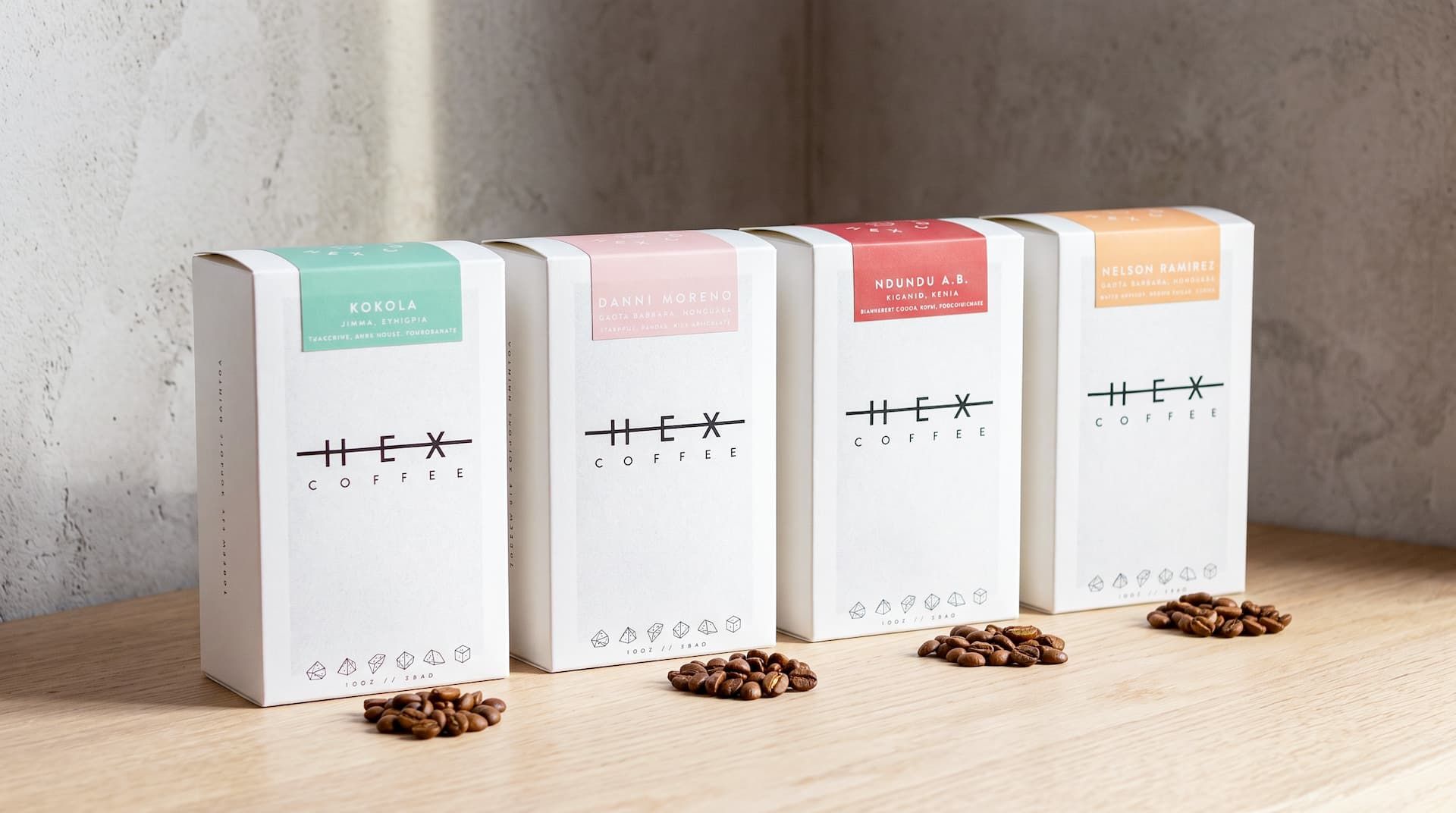
Hex Coffee is a specialty roaster that grew fast in the coffee community in Charlotte on quality beans and a tight-knit coffee community. As its coffee went to market, the brand wanted a box that created a tactile response and carried the passion behind the roast, without straining a young roaster's budget.
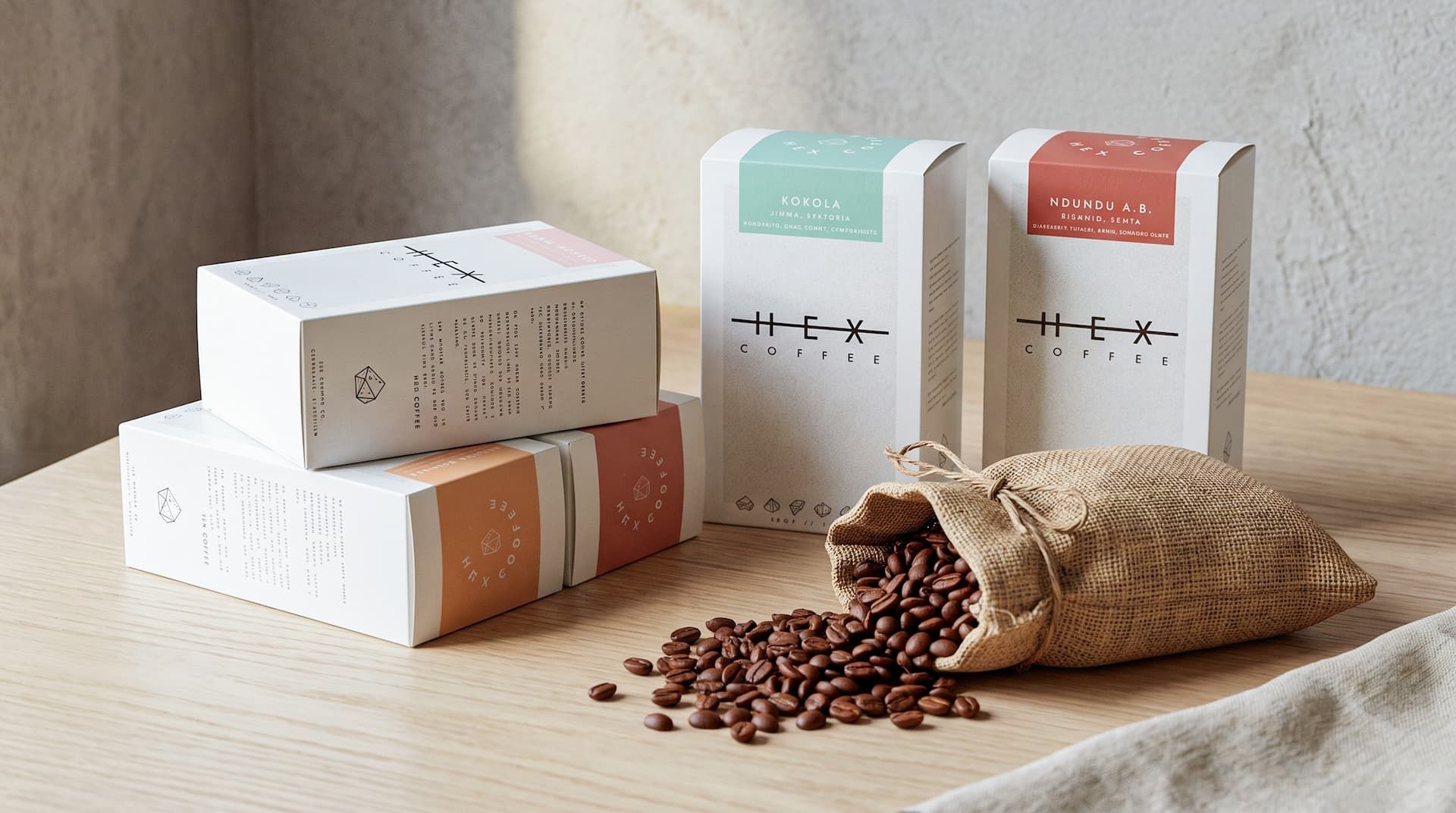
Hex Coffee believed customer experience and the quality of the roast were the two pillars of a good coffee community, and the packaging had to capture both. For a specialty roaster, the box is the brand's handshake with a new customer, and it has to make that impression a growing business can carry.
The first experience that people have with our brand is often the packaging, and because of that, we've been able to have our coffees served all over the world.
Tanner Morita
Co-Founder at Hex Coffee
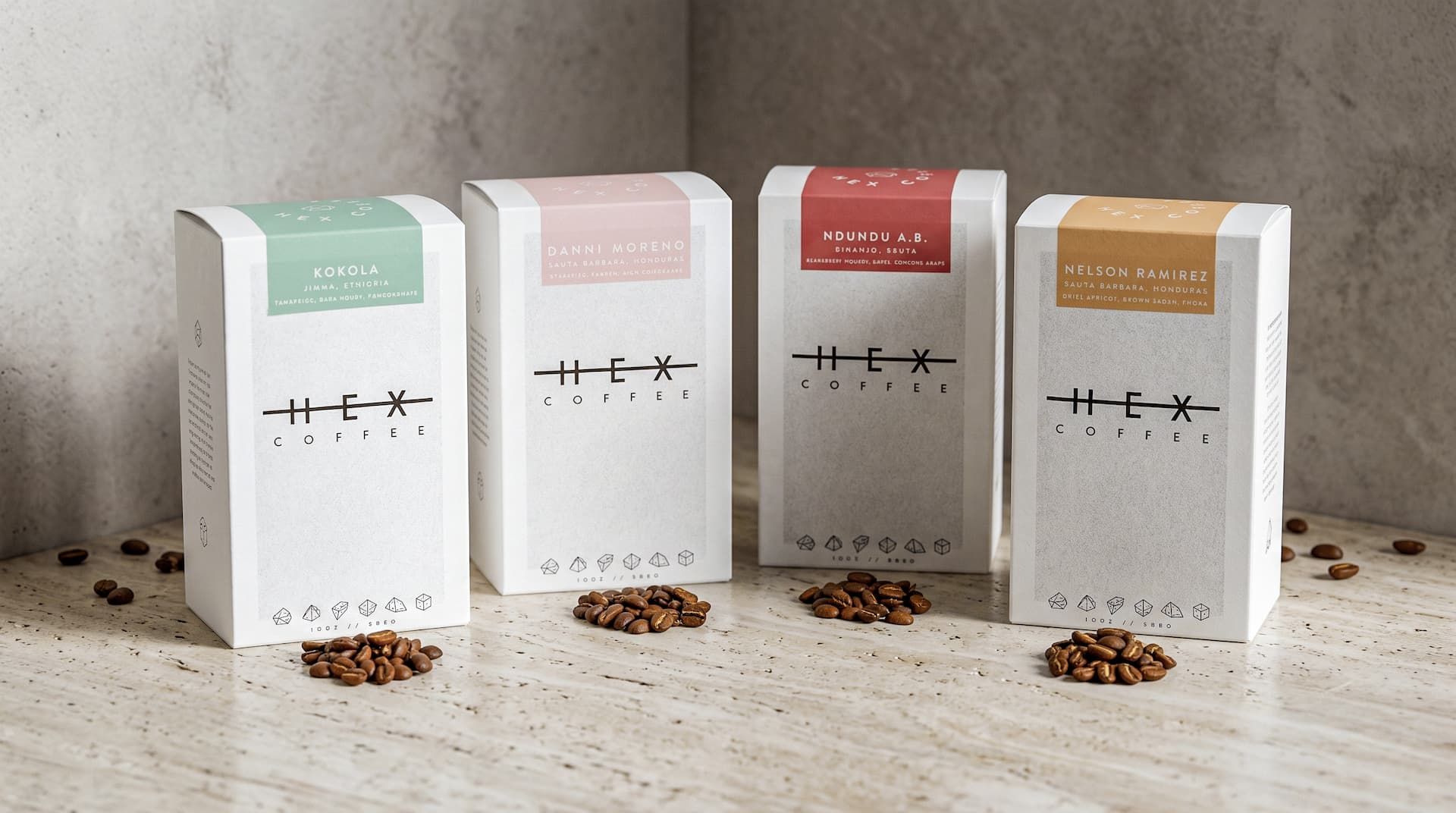
Hex Coffee worked closely with our team to shape the box from the ground up, so every decision, from the dimensions to the coating to the structure, was made to fit the brand rather than a stock template. The result is an auto-bottom folding carton built in 18-point SBS paperboard, a folding carton with enough weight to feel substantial in the hand while staying flexible and durable enough to protect the beans. That heft is the tactile response Hex was after, the signal that a specialty roast has arrived in a specialty box the moment a customer picks it up.
Conveying the care behind the roast came down to the print. Offset printing and an aqueous coating reproduced the minimal artwork cleanly and gave it depth, ensuring the design feels intentional rather than mass-manufactured. Rather than overpowering the understated design, the finish enhances its subtle elegance, which is how a brand that treats coffee as a craft wanted to introduce itself.
Our recommendations on structure, finishing, and shipping trimmed cost, so Hex Coffee could reach the premium feel it wanted and still put more money back into the coffee bar and the beans. Getting the box right the first time also gave Hex Coffee a spec it could reorder as it grew from that first run into a five-figure production order.

Aqueous coating

Offset lithographic printing

Auto-bottom structure
The finished box gave the coffee a proper first impression, a clean minimal face with the depth that offset printing and an aqueous coating bring. The work drew notice well beyond Charlotte, with the packaging featured on the coffee community Sprudge and its audience of more than 100,000. From a first small run to five-figure production, Hex Coffee showed that getting the box right early gives a brand something it can build on.
Stay informed with the latest case studies and advancements from our team.